Cryptocurrency trading has become one of the most popular ways to participate in the digital asset economy. Whether you’re interested in Bitcoin, Ethereum, or other cryptocurrencies, understanding the basics is the first step toward becoming a successful trader.
If you’re completely new to crypto, this guide will help you understand how cryptocurrency trading works, how to choose an exchange, and how to manage risk while building your experience.
Key Takeaways
- Cryptocurrency trading involves buying and selling digital assets for profit.
- Beginners should start with Spot trading rather than Futures trading.
- Choosing a trusted exchange is essential for security.
- Risk management is more important than chasing profits.
- Start small and focus on learning before increasing your investment.
What Is Cryptocurrency Trading?
Cryptocurrency trading is the process of buying and selling digital currencies through a cryptocurrency exchange. Traders attempt to profit from market movements by purchasing assets at lower prices and selling them at higher prices.
Unlike traditional stock markets, cryptocurrency markets operate 24 hours a day, 7 days a week, allowing traders to access opportunities at any time.
Some of the most popular cryptocurrencies include:
- Bitcoin (BTC)
- Ethereum (ETH)
- Solana (SOL)
- XRP
- BNB
Each cryptocurrency has different use cases, risks, and growth potential, making research an important part of the trading process.
Step 1: Learn the Basics
Before investing any money, take time to understand how cryptocurrencies and blockchain technology work.
Learning the fundamentals will help you avoid common beginner mistakes and make better trading decisions.
Focus on understanding:
- What Bitcoin is
- How blockchain technology works
- What causes cryptocurrency prices to move
- The difference between investing and trading
- Basic market terminology
Knowledge is one of the most valuable assets a trader can have.
Step 2: Choose a Trusted Cryptocurrency Exchange
A cryptocurrency exchange is the platform where you buy, sell, and trade digital assets.
When selecting an exchange, consider:
- Security and reputation
- Trading fees
- Available cryptocurrencies
- Deposit and withdrawal methods
- Customer support
- Trading tools and features
A reliable exchange provides a safer environment and a better overall trading experience.
Step 3: Create and Secure Your Account
After choosing an exchange, create your account and prioritize security.
Security Checklist:
- Use a strong password
- Enable Two-Factor Authentication (2FA)
- Complete identity verification if required
- Set up anti-phishing protection when available
Protecting your account should always be your first priority.
Step 4: Deposit Funds
Most exchanges allow deposits through:
- Bank transfers
- Credit cards
- Debit cards
- Cryptocurrency transfers
If you’re a beginner, start with a small amount that you can comfortably afford to lose while learning.
Never trade with money needed for rent, bills, or essential expenses.
Step 5: Start with Spot Trading
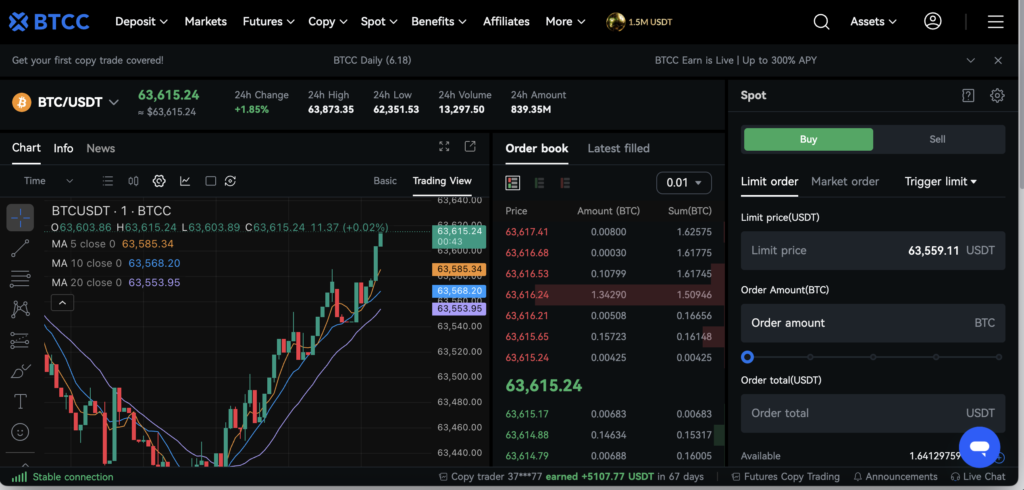
📷 BTC/USDT Spot Trading interface on BTCC Exchange showing real-time market data, price charts, and order book information.
Spot trading is generally the best starting point for beginners.
When you buy cryptocurrency on the Spot market, you own the actual asset and can hold it for as long as you want.
Benefits of Spot Trading:
- Lower risk
- No liquidation risk
- Easier to understand
- Suitable for long-term investing
Many experienced traders recommend mastering Spot trading before exploring more advanced products.
Spot Trading vs Futures Trading
Understanding the difference between Spot and Futures trading is important.
| Feature | Spot Trading | Futures Trading |
|---|---|---|
| Own Cryptocurrency | Yes | No |
| Leverage | No | Yes |
| Liquidation Risk | No | Yes |
| Risk Level | Lower | Higher |
| Beginner Friendly | Yes | No |
For most beginners, Spot trading is the safer and more suitable option.
Step 6: Learn Basic Market Analysis
Successful traders use analysis before entering trades.
Technical Analysis
Technical analysis focuses on price charts and market indicators.
Common tools include:
- Support and Resistance
- Trend Lines
- Moving Averages
- RSI (Relative Strength Index)
- Trading Volume
Fundamental Analysis
Fundamental analysis focuses on the project’s long-term value, including:
- Development activity
- Adoption
- Technology
- Team and leadership
- Market demand
Combining both approaches can improve decision-making.
Risk Management: The Most Important Skill
Many beginners focus on profits, but successful traders focus on protecting their capital.
Follow these simple rules:
- Never invest more than you can afford to lose
- Avoid emotional decisions
- Use stop-loss orders when appropriate
- Diversify your portfolio
- Avoid excessive leverage
A trader who protects capital can always trade another day.
Common Mistakes Beginners Make
Many new traders lose money because of avoidable mistakes.
Common mistakes include:
- Buying because of hype or FOMO
- Overtrading
- Using high leverage too early
- Ignoring risk management
- Following social media blindly
- Investing without research
Learning from these mistakes can save both money and frustration.
Recommended Exchanges for Beginners
Different exchanges offer different features and advantages.
Popular choices include:
Always compare fees, security features, and available trading products before choosing a platform.
Final Thoughts
Cryptocurrency trading offers exciting opportunities, but success requires patience, discipline, and continuous learning.
Start by understanding the basics, choose a trusted exchange, focus on Spot trading, and practice proper risk management. Over time, your knowledge and experience will become more valuable than any short-term market movement.
Remember: successful trading is not about getting rich overnight. It’s about making smart decisions consistently and improving over time.
Disclaimer: This article is for educational purposes only and does not constitute financial, investment, or trading advice. Cryptocurrency trading involves risk, and you may lose part or all of your investment. Always do your own research before making financial decisions.